

"Parents residing in the northern part of London wants to find an remarkable and experienced instructor to support their youngest child on his first steps to growing into an British gentleman."
Upon seeing this post, you might easily miss the term "initial stages" as just an expression.
Yet, it may be the crucial aspect of this distinctive job advert, as it seeks to find a mentor for a 12-month-old.
Many of applications have now been submitted since the unidentified family posted their search for the £180k-a-year tutor, who has to be "someone very special".
In recent few weeks, the post has gained notice across the news, with several wondering why?
Innovative Idea
A tutoring expert, CEO and founder of an education consultancy, which is helping the family in their hunt, said that notwithstanding first skepticism, he found the concept "visionary", and "advanced".
When he consulted the family, he noted they appreciated the atypical character of their demand, and how immature their son is.
However, they stated that they "were unwilling to delay any longer" to engage a tutor, as they had waited until their elder sibling was five, and by that point "cultural bias had by then taken hold".
But what did the family refer to by "cultural leaning"?
It's "all-encompassing", he replied. "The way you eat, the way you speak".
He stated the elder child had adopted "extremely delicate, body language" from the family, and had taken on their cultural habits. The family told the consultant they hoped to prevent history to repeat itself with their younger child.
The intention: To bring in a English tutor, who needs to speak with RP, to guide the baby from the very start.
Subtle Influence
"Much of the development at the outset here is kind of osmotic," stated Adam.
It's by means of this subtle influence that the family are expecting the child will adopt the English characteristics they want to impart.
The consultant explained the tutor needed to be someone who attended "the appropriate educational institutions – comparable categories of schools as the family hope to send their son to".
"The tutor simply needs to be the suitable individual, they'll be carrying out things they may not realize they're doing, simply by nature," he added.
Money No Object
The family informed Adam the selected educator should preferably also have familiarity of or interest in horse riding, winter sports, creative fields and musical activities so as to influence the child in a diverse set of interests.
More than that though, he explained the family desired the tutor to enrol the child on a selection of classes so the child would be "equestrian training and picking up an musical instrument by the time they are around three years old".
In the family's minds, guiding their son develop into a "UK sophisticate" will result in success and provide access.
"Considering the pros and cons of that, because it's definitely a class statement," he adds.
But, despite all this guidance in "English culture", might the child adopt what is termed cultural influence from the globally influenced family he resides with regardless?
"Certainly", replied the CEO. "They know this might not succeed, but they've merely embraced the view of, 'we should try and we'll proceed as early as we can', because the cost of it is not relevant," he explained.
Overly Optimistic
There are some in the education sector who share these doubts.
Another CEO, head and founder of an educational organization, who also offer individual instructors, stated that "the development of becoming bicultural, or actually, forming one's identity, is something that must be grown into, not manufactured."
The expert wrote that he had emigrated from Asia to the United Kingdom at the age of childhood, and had been educated understanding and embodying dual heritages. He went on to study at Cambridge University.
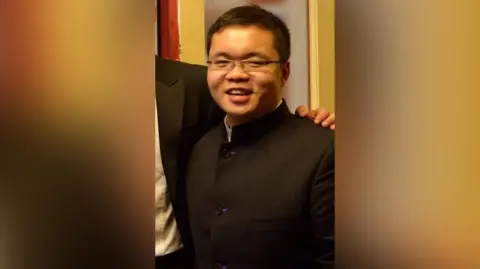
"The notion that one individual can serve as a living vessel of UK identity, someone who can possibly impart the characteristics of a English gentleman to a 12-month-old child, seems to me optimistic and unrealistic," he commented.
"Based on my background, employing a quintessentially British tutor from babyhood will will not automatically achieve the outcome they hope for.
"I never had that kind of mentor, and nevertheless I have been fortunate enough to experience many of the situations they hope for their son."
He continued: "The fact is, self-identity can not be imposed from the external environment; it must be chosen, and it must originate internally."
Acquiring Englishness
Naturally, Britishness is something the CEO thinks can be educated – and commercialized.
"I believe the situation that the world holds us in this respect is something that we should be cherishing|valuing|appreciating


